Compliance
The paperwork is the product.
Pet supplements are regulated as animal feed — not as human food, and not as medicines. That single fact determines who has to register what, and what your label is allowed to say.
Who carries what
Registration follows the name on the label
This is the point brands most often get wrong. The obligation attaches to a role, and the role is defined by what is printed on the pack.
| Market | Obligation | Carried by |
|---|---|---|
| United States | Facility registration with the FDA for any facility that manufactures, processes, packs or stores animal food | The plant |
| United States | Product label: product name, ingredients in descending order of weight, a nutritional adequacy statement referencing AAFCO, feeding directions, contact details | The label bearer |
| United States | State-level pet food registration — most states require the manufacturer, distributor or guarantor to register the product, and the guarantor is the party named on the label | The label bearer (you) |
| European Union | Pet food labelling falls under animal feed legislation (Regulation 767/2009). There is no separate pet food regime, and human food rules do not apply | The label bearer |
| European Union | Labelling practice and nutrient levels are set out in the FEDIAF labelling code and nutritional guidelines | The label bearer |
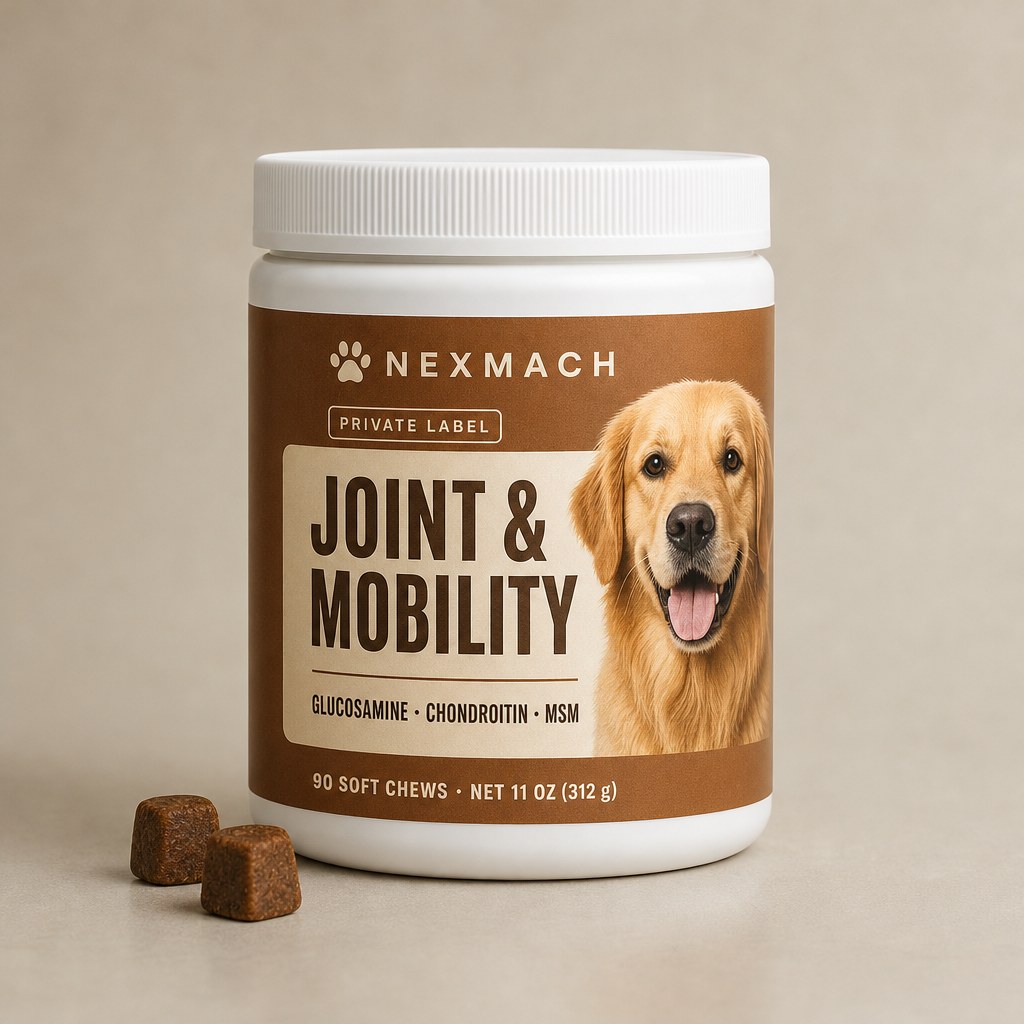
Our practice: the label bearer on every programme we run is your brand. We do not put our own name on your product, because doing so would move the registration obligation onto us and make your range harder to transfer later.
Deliverable
The eight-part compliance pack
Delivered as a set with every programme, and quoted as a separate line rather than buried in the unit price — because it is a distinct piece of work, and bundling it hides what you are paying for.
Label compliance review
Product name, ingredient order, net content, contact details and mandatory warnings, checked against your destination market.
Nutrient adequacy wording
US and EU versions, because the two routes do not accept the same statement.
Ingredient & allergen declaration
Full ingredient schedule with allergens flagged, in your market's required order.
Adverse-event procedure
A written reporting process for consumer complaints and suspected adverse events.
QC document skeleton
A standard-operating-procedure framework you can adopt as your own quality manual.
Third-party testing arrangements
Panel testing against an agreed list: microbiology, heavy metals and nutritionals.
Permitted-claims checklist
What your copy may and may not say in the destination market, before it reaches artwork.
Delivery acceptance checklist
The sign-off sheet for a production run, so what you receive matches what was agreed.

The NASC seal
What we can and cannot deliver
The NASC quality seal is issued to member companies that have passed a third-party audit and continue to meet its conditions: a QC manual and standard operating procedures, an adverse-event reporting system, label standards, independent random laboratory testing, annual training, and the audit itself.
We cannot obtain that seal on your behalf, and we will not claim to. It is awarded to a company for its own operations, not to a supplier for a product.
What we can do is deliver the documentation and procedures the audit asks for. Items 04, 05 and 06 of the pack above exist for exactly that purpose.
Red line
Claims we will not write
Treating a supplement as though it were a medicine is the fastest way to lose a listing and, in some markets, the whole range. Our default position on copy:
- No disease treatment or prevention claims
- No diagnosis language, and no dosing for a condition
- No comparative claims against veterinary products
- Health statements limited to what the destination market permits
- Warnings and disclaimers included as required, not omitted for design reasons
We are a supply partner, not a regulatory consultancy or a law firm. The pack is built to be handed to your compliance adviser or your importer for sign-off — not to replace them.
Common questions
Registration questions we get asked
The three below account for most of the confusion in this category. They are answered the same way in writing as they are here.
Do pet supplements need FDA approval to be sold in the United States?
Who has to register a pet supplement in the United States?
Is a pet supplement a medicine or a feed product?
Sources
Where the above comes from
- FDA — How do I Start an Animal Food Business? (facility registration for animal food)
- AAFCO — Registration & Licensing and Regulators' Role (state-level registration and the guarantor role)
- EU animal feed labelling, Regulation (EC) No 767/2009, as summarised by FEDIAF
- FEDIAF — Code of Good Labelling Practice for Pet Food; Nutritional Guidelines
- NASC — NASC Quality Seal conditions
Regulation changes. Everything on this page is a working summary for commercial discussion, current as at October 2026, and should be re-checked against the primary source before you print artwork.
Ask what your market requires
Tell us the destination and the format. You will get a position on what applies.
Start an inquiry